Boogs77/65C02 Italiano

W65C02S · TMS9918A · AY-3-8910

Homemade 8-bit computers around the 65C02

It started as a modular computer on a backplane, the BO6502. From its boards came two complete machines, the miniPET and the miniVIC. Each has its own BIOS. The miniVIC also has a library of games, office applications and an emulator that runs all of it in the browser.

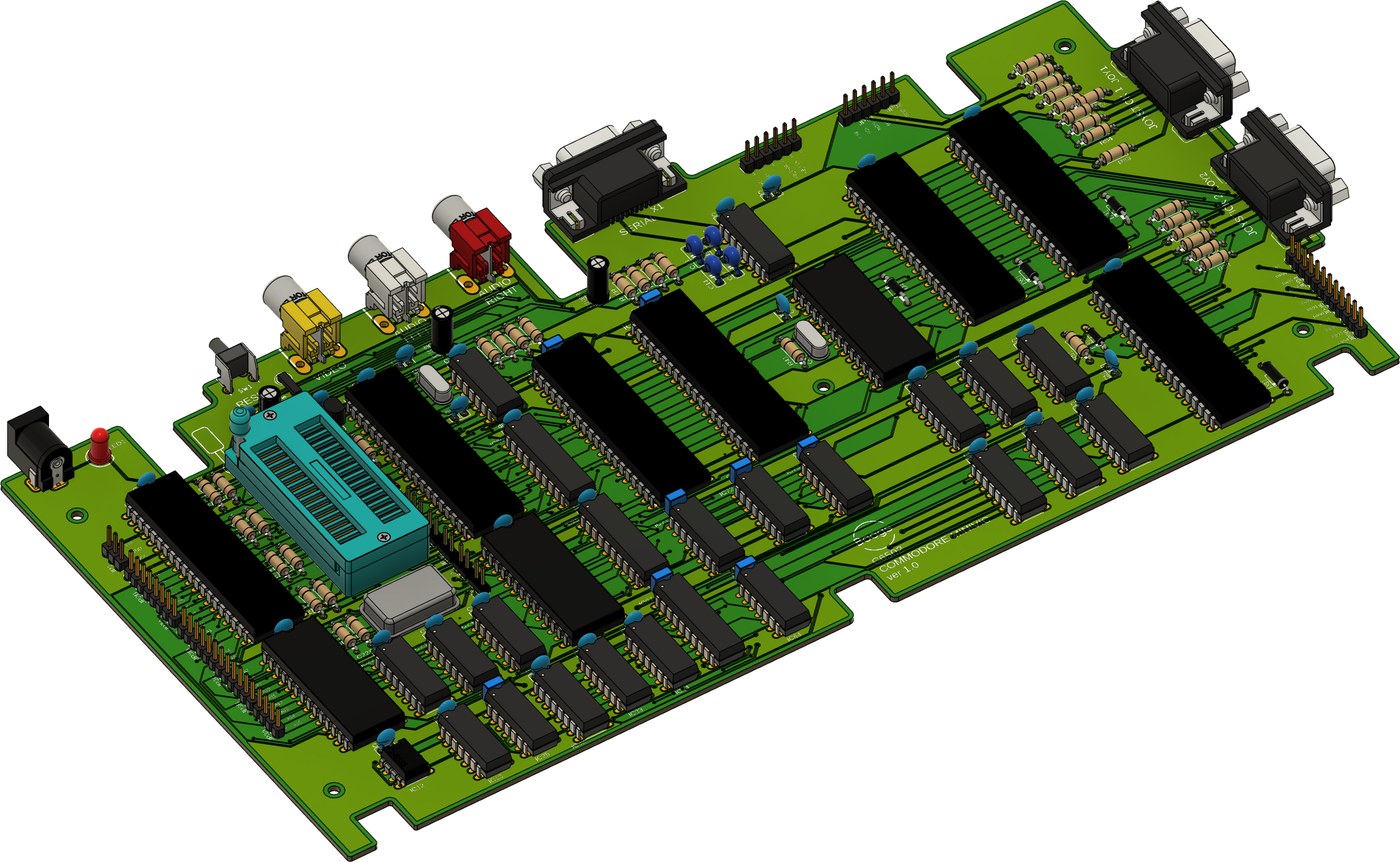
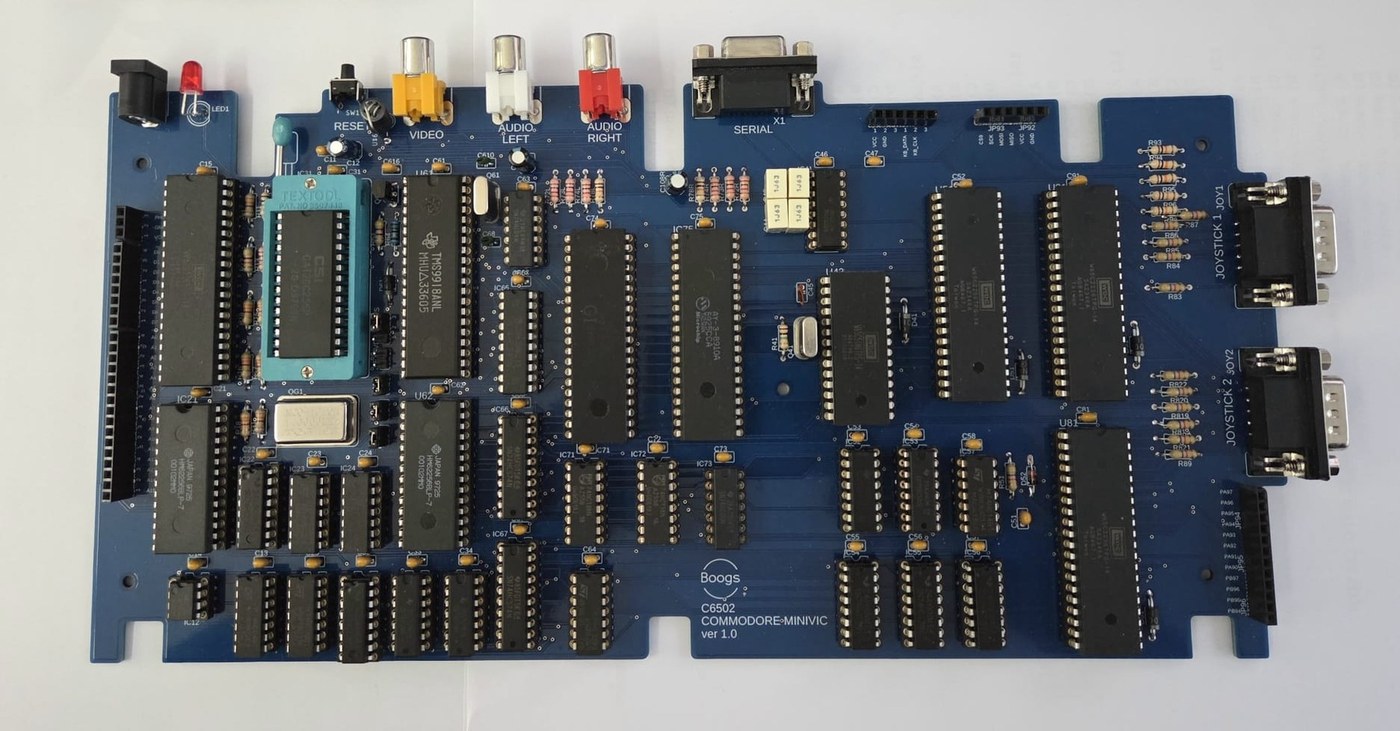
The miniVIC single-board computer: photo of the assembled PCB with the CPU, ZIF ROM socket, video, audio and joystick connectors
miniVIC PCB ver 1.0

The machines

The three computers share the same design: a W65C02S CPU, 32KB of RAM at $0000-$7FFF, a 32KB EEPROM at $8000-$FFFF, and I/O devices decoded inside the ROM area.

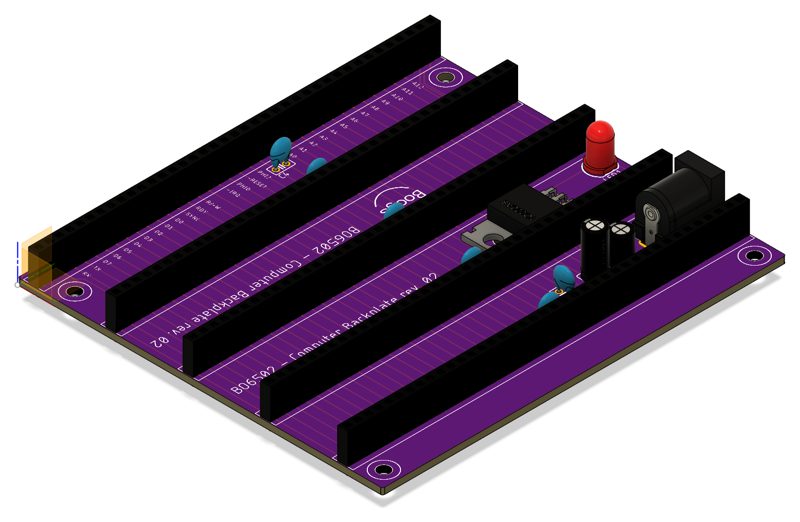
BO6502 backplate with five slots
modular

BO6502

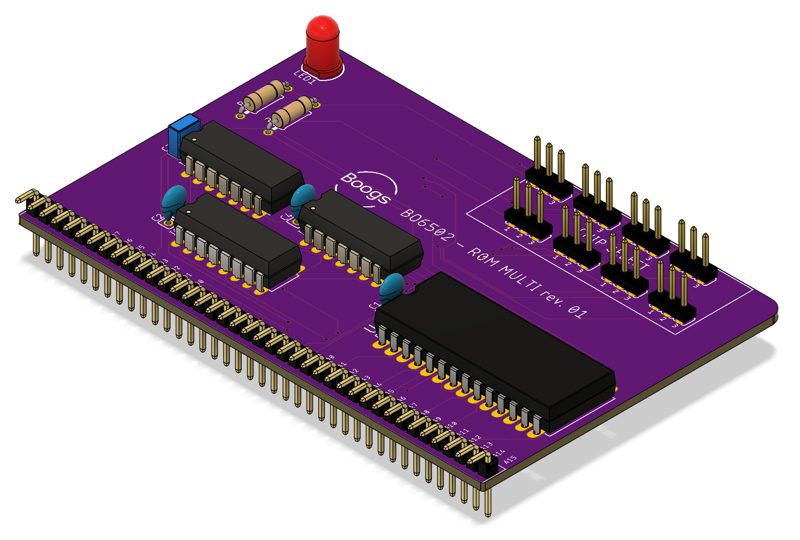
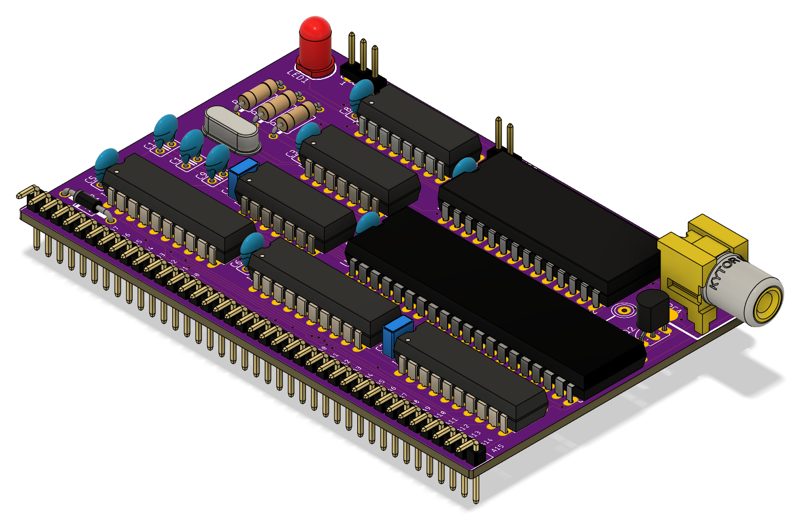
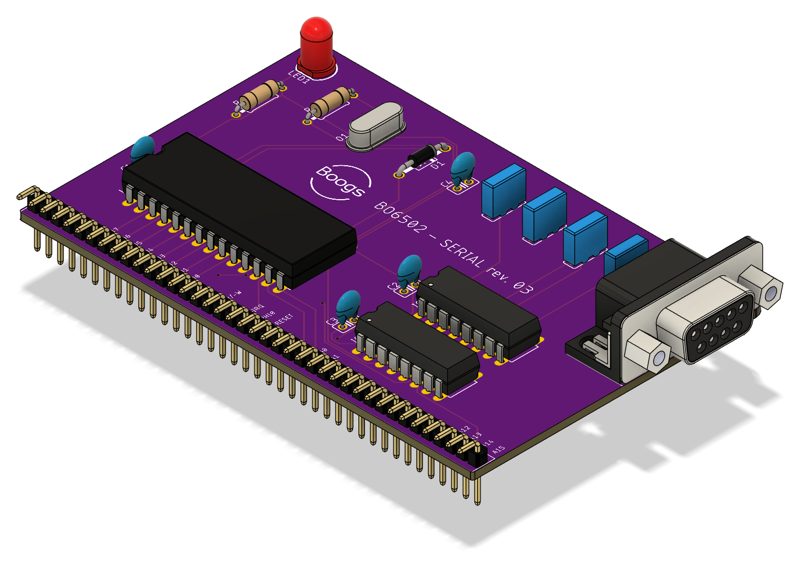
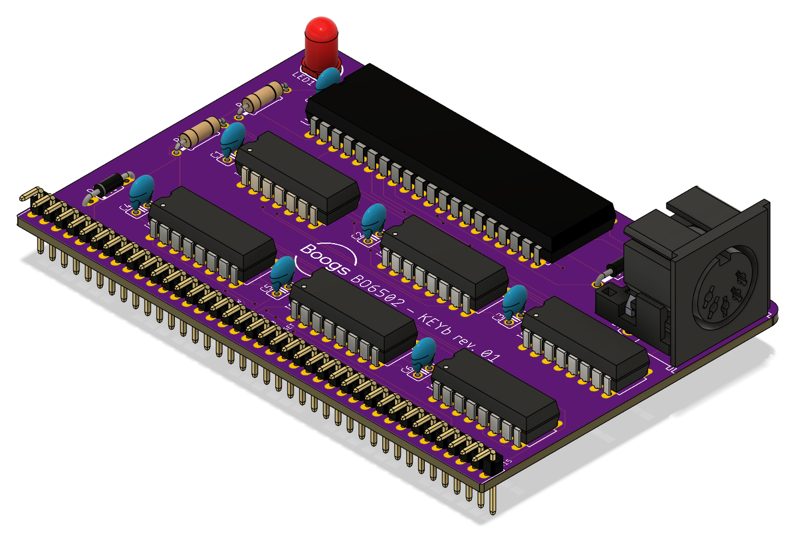
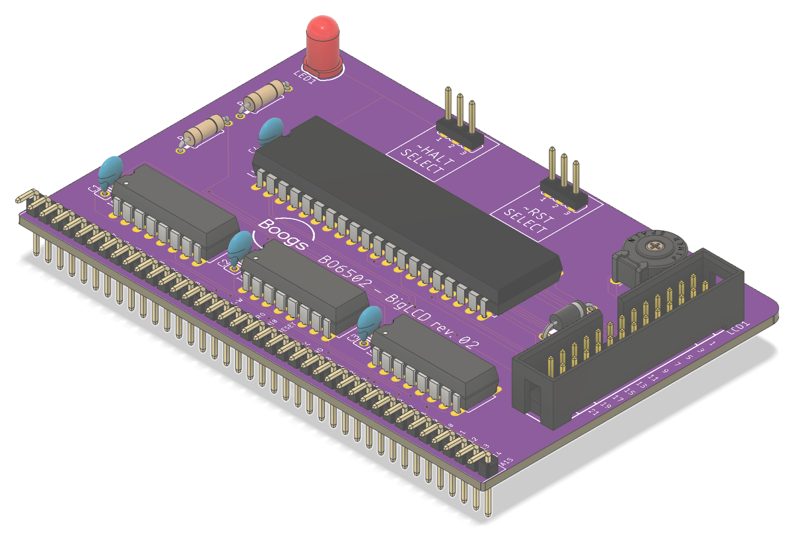
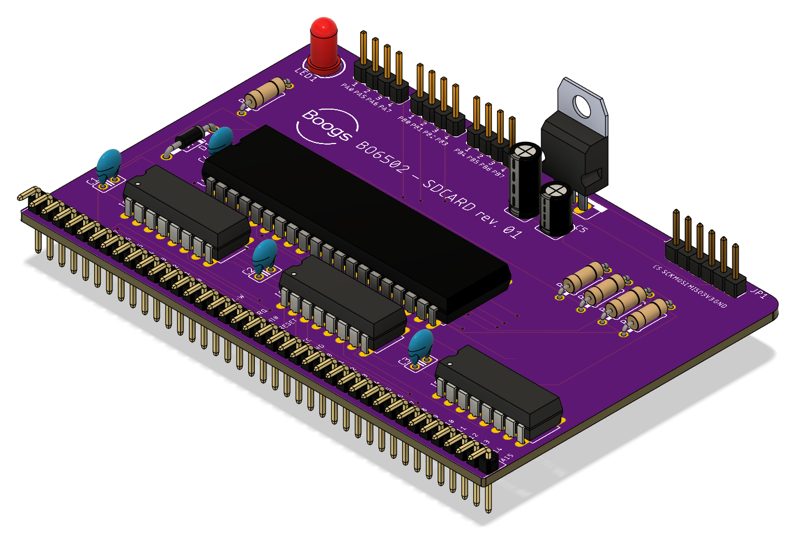
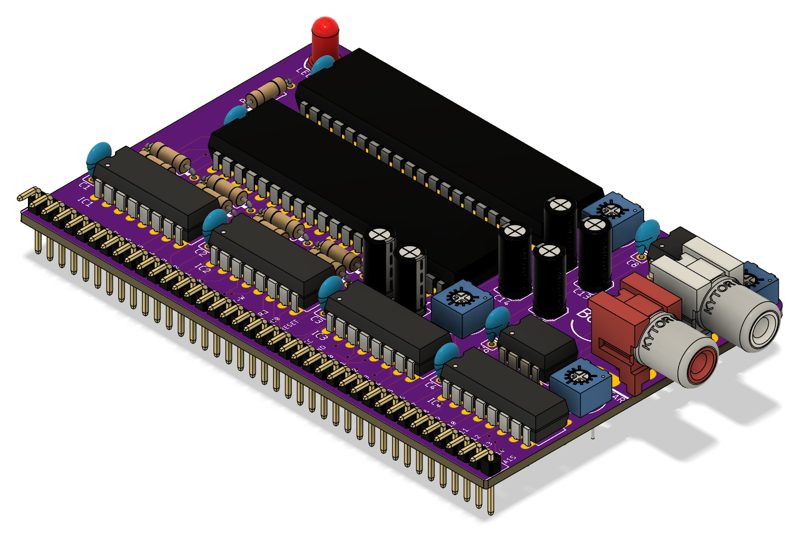
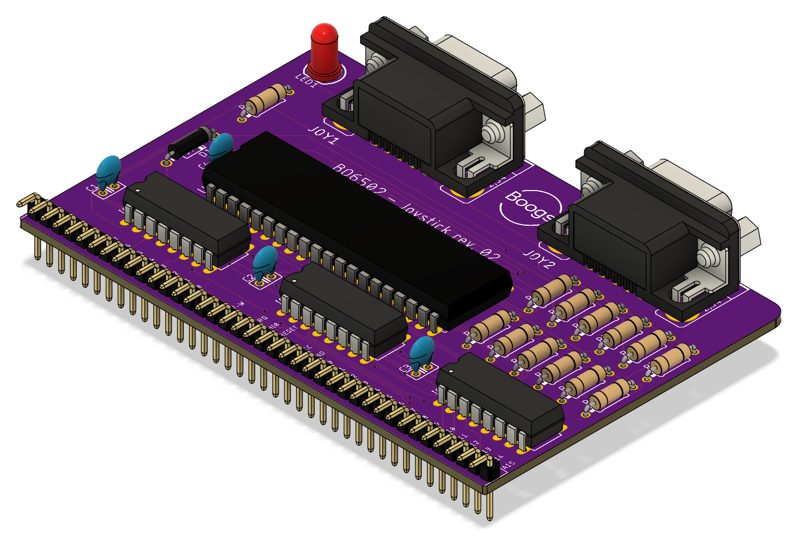
A modular computer on a 39-pin bus. Every function is a separate board plugged into a backplate, so the system can be rebuilt and extended.

  • Switchable clock: 2 MHz, 1 MHz, 500 kHz
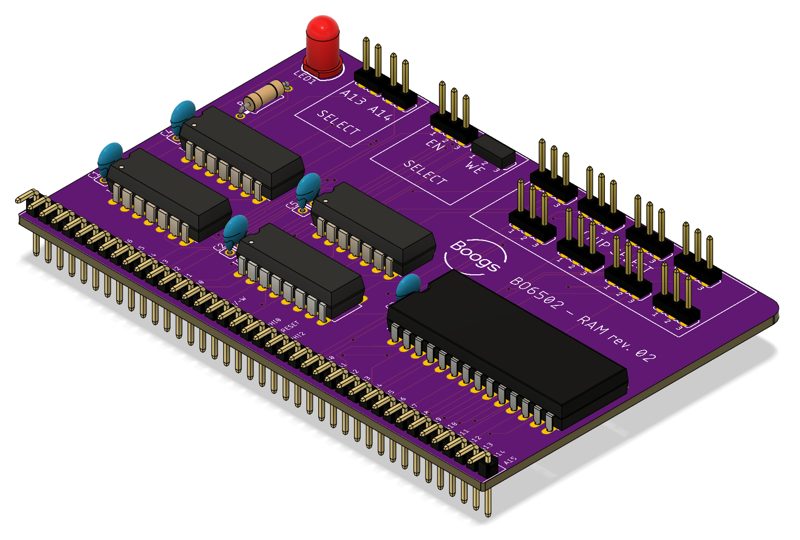
  • RAM and ROM boards with jumpers to free space for I/O
  • Video, serial, keyboard, SD card, audio, joystick and LCD boards
BO6502 repository → BO6502 operation manual →
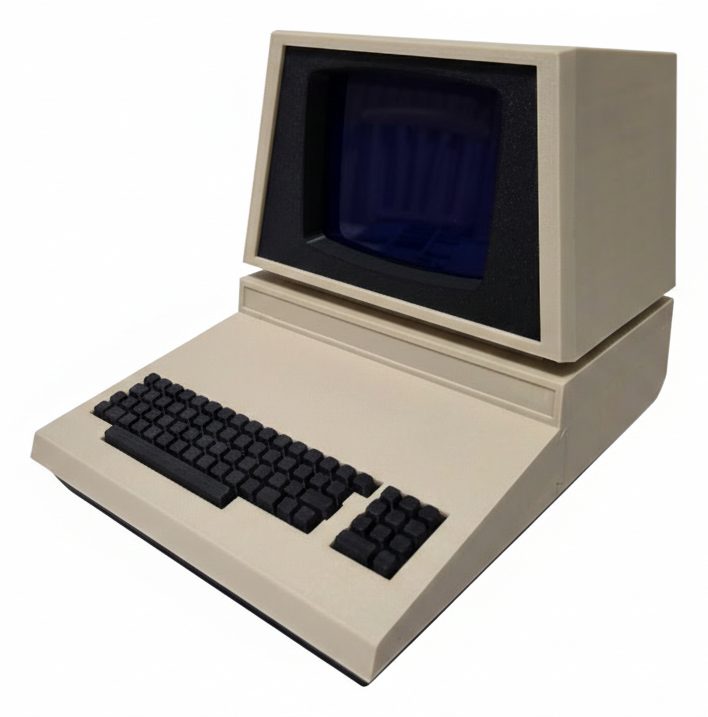
The miniPET: a small beige computer with a built-in screen and keyboard
all-in-one

miniPET

A compact computer inspired by the look of the Commodore PET, in a 3D-printed case designed in Fusion 360.

  • BIGLCD graphic display at $D19X
  • Keyboard at $D18X, serial port at $CXXX
  • WozMon, Microsoft BASIC and four classic games in Italian and English
miniPET repository →
The miniVIC board in 3D, seen from an angle
arcade

miniVIC

A single-board arcade computer. It puts the BO6502 modules on one PCB, with color video, stereo sound and two joysticks.

  • TMS9918A video: 256x192, 16 colors, 32 sprites
  • Two AY-3-8910 chips for stereo sound
  • DIN5 keyboard, two Sega-style joysticks, SD card, serial port
miniVIC repository →

BO6502 modules

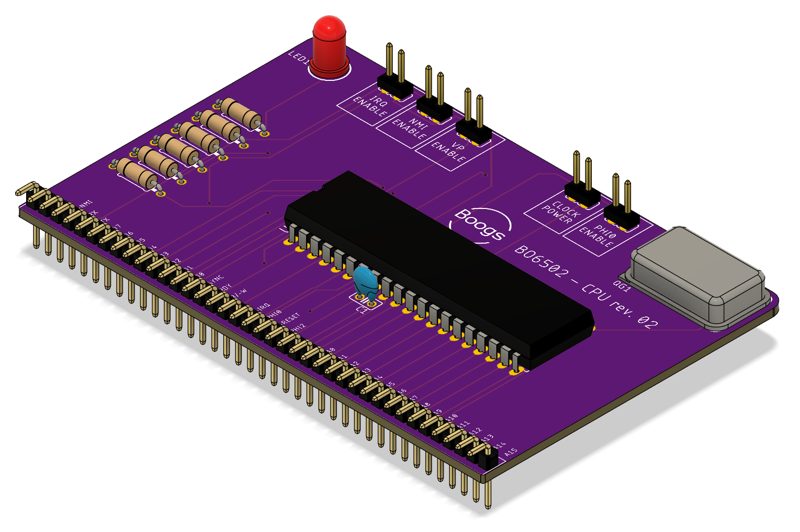
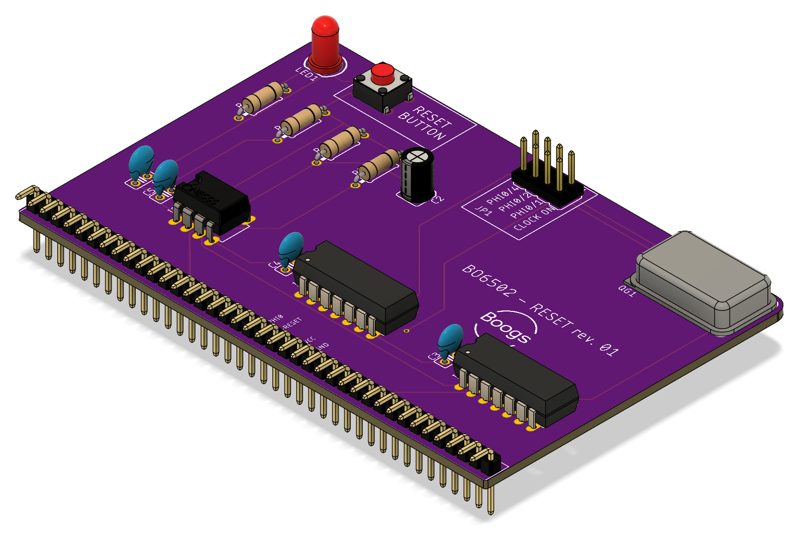
Every block of the miniPET and the miniVIC starts as a BO6502 board. Each one has its own folder in the BO6502 repository with schematic, PCB and notes.

Other boards in the repository: the Bridge Connector between backplates, the legacy 16x2 LCD and keyboard board, the LED test board and the MONITOR board.
Software for the miniVIC

All the software is written in 65C02 assembly. Programs are loaded from the SD card at $1000 and call the BIOS through a fixed jump table at $FD00.

Games

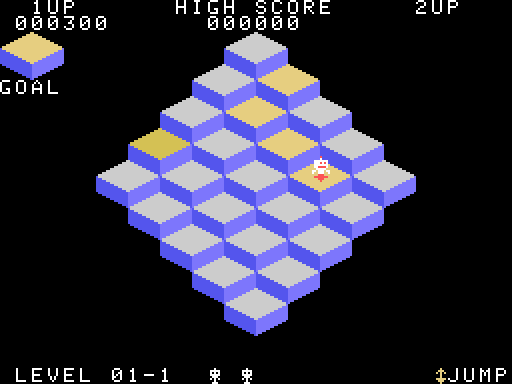
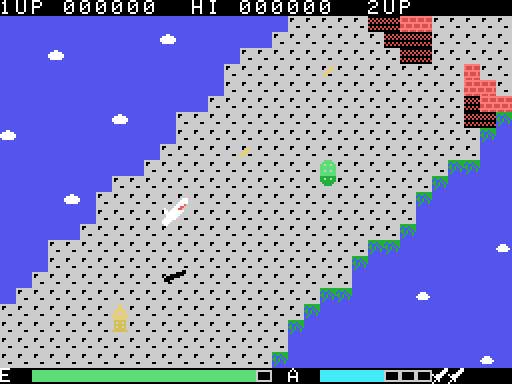
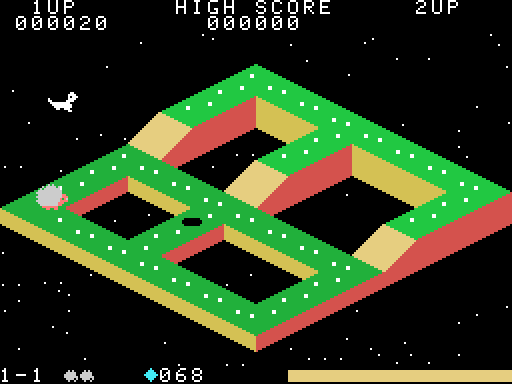
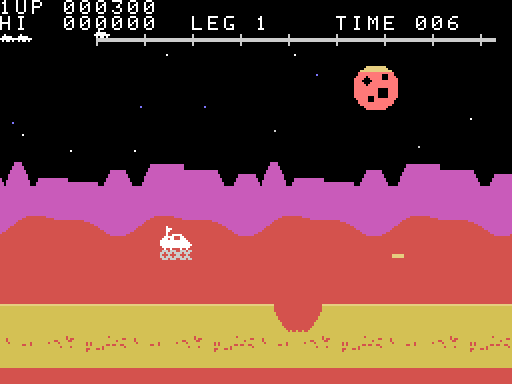
Twenty-eight games: tributes to the arcade classics of 1976-1983 and original titles. They use TMS9918A tile and sprite graphics and stereo music on the two AY-3-8910 chips. Every game keeps its eight best scores on the SD card.

Robert: isometric cube-hopping game
Robert
Cloud Raider: isometric shooter
Cloud Raider
Crystal Gardens: isometric maze game
Crystal Gardens
Dune Ranger: side-scrolling rover game
Dune Ranger
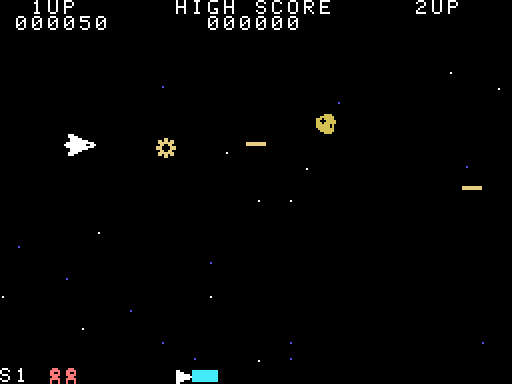
Core Runner: space run and platform game
Core Runner
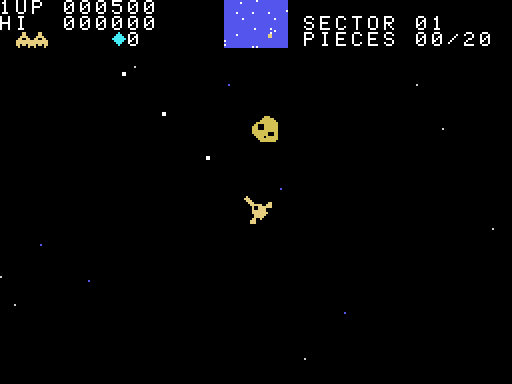
Deep Space Miner: space mining shooter
Deep Space Miner
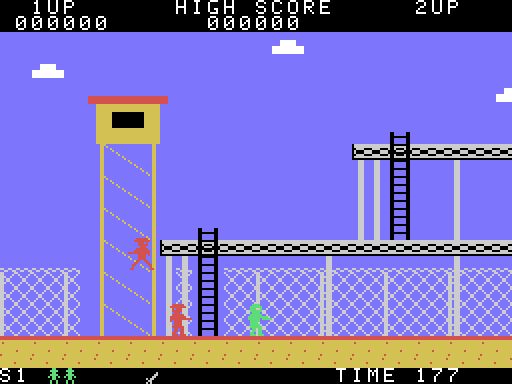
Special Forces: side-scrolling action game
Special Forces
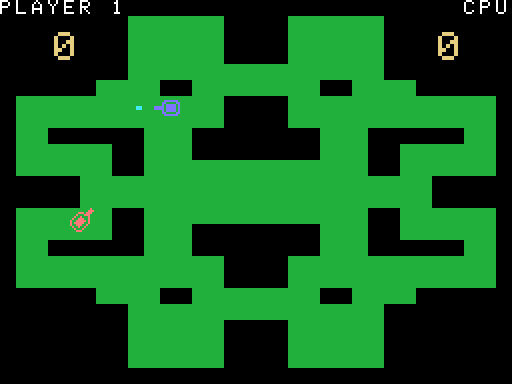
Tank vs Tank: two tanks on a battlefield
Tank vs Tank

miniVIC Games repository →

Applications

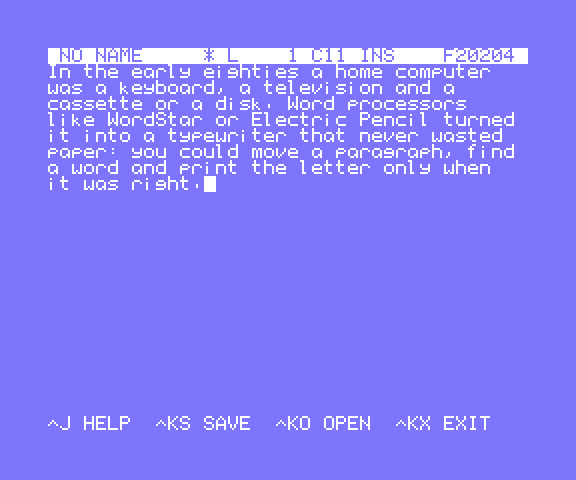
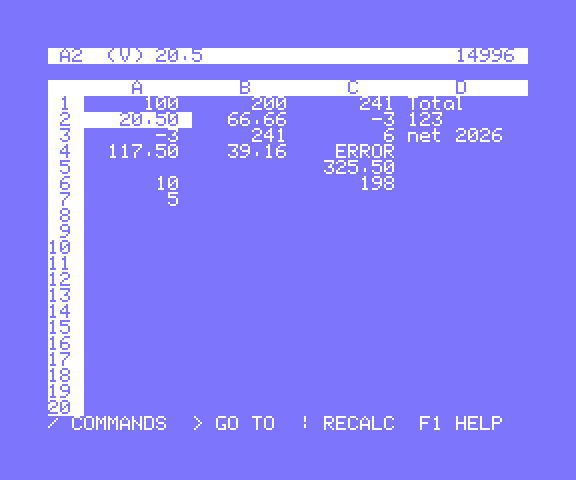
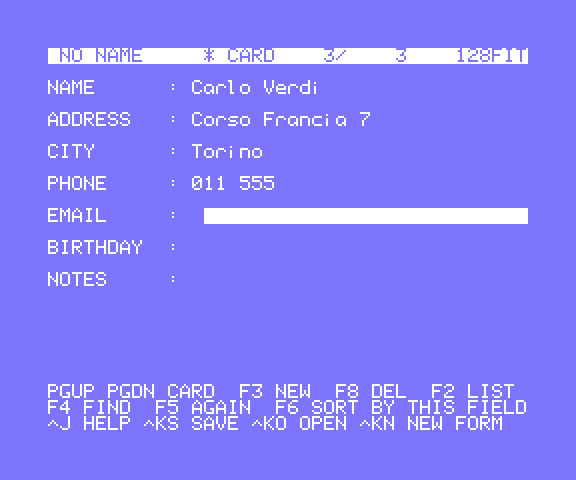
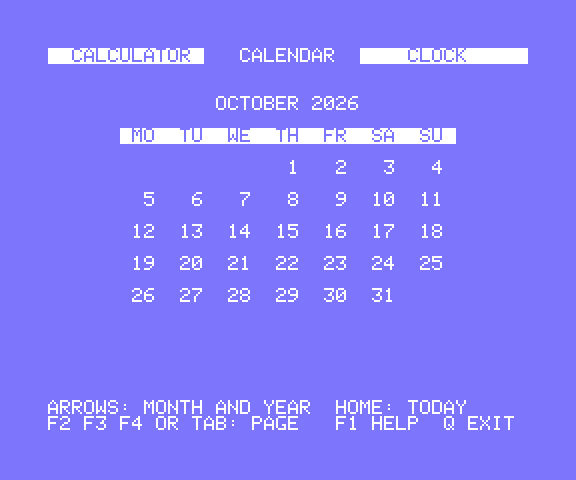
Eight office applications in the spirit of the early 1980s, in 40-column text mode. Documents are saved on the SD card.

miniVIC WRITE text editor
WRITE · text editor
miniVIC CALC spreadsheet
CALC · spreadsheet
miniVIC FILE card file
FILE · card file
miniVIC DESK calendar
DESK · calculator, calendar
miniVIC MON machine language monitor
MON · monitor
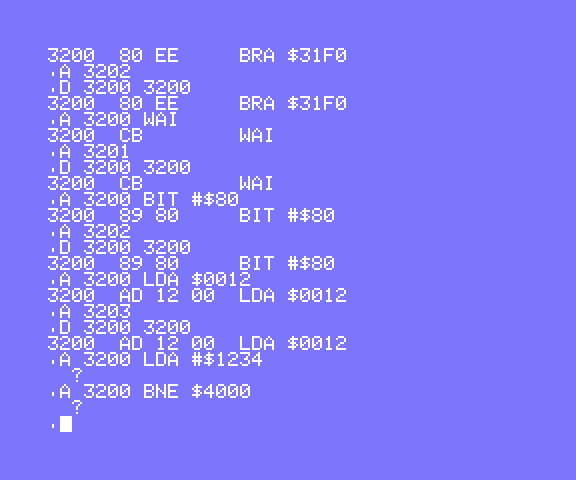
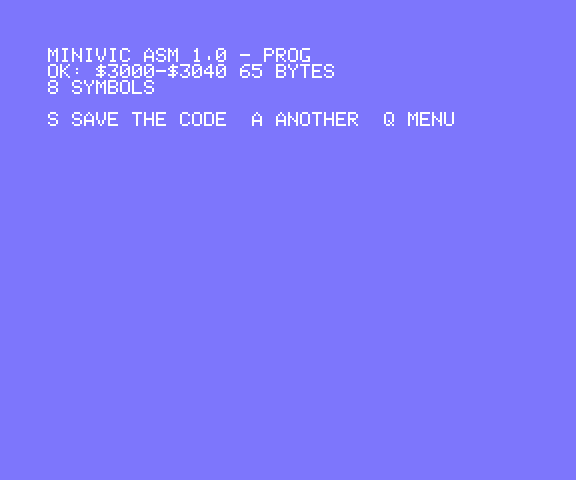
miniVIC ASM assembler
ASM · 65C02 assembler

TERM (serial terminal) and DISK (SD card manager) complete the set. miniVIC Apps repository →

BIOS

The miniVIC ROM holds WozMon, Microsoft BASIC 1977 and a BIOS with a boot menu. The menu has four entries: monitor, BASIC, SD card programs and system information. The current version is 16.11.26 KEYB/SD R2.

  • Extended keyboard mode: arrows, function keys, Ctrl, Alt
  • SD read and write on SDSC and SDHC cards
  • SD programs menu with pages and submenus for games and applications

miniVIC BIOS repository →

AddressDevice
$0000-$7FFFRAM 32KB
$8000-$AFFFROM: BASIC and BIOS
$B000TMS9918A video, interrupt on NMI
$C000W65C51 serial port
$D180Keyboard VIA
$D3802x AY-3-8910
$D580Joystick VIA
$DD80SD card VIA
$E000-$FFFFROM: menu, jump table, WozMon

Operation manuals

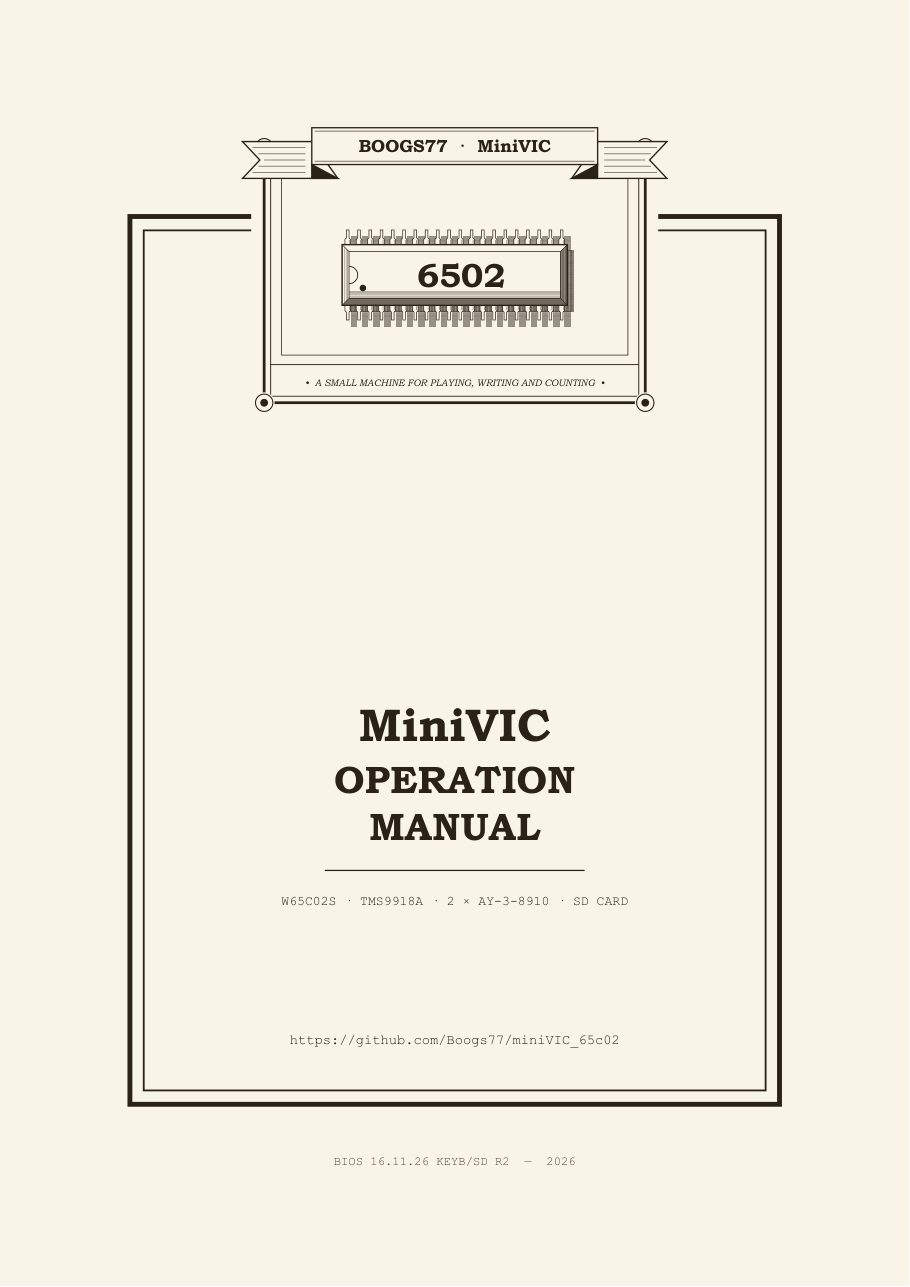
The miniVIC Operation Manual follows the style of the 1976 Apple-1 manual. It describes the whole machine for BIOS 16.11.26 KEYB/SD R2: memory and device maps, address decoding, the schematic, the bill of materials, every chip register, the BIOS menus, WozMon, Microsoft BASIC, the applications, the games and the SD card format.

It comes in English and Italian, in a screen edition (cream paper, colour pictures) and a print edition (white paper, grey pictures).

Cover of the miniVIC Operation Manual

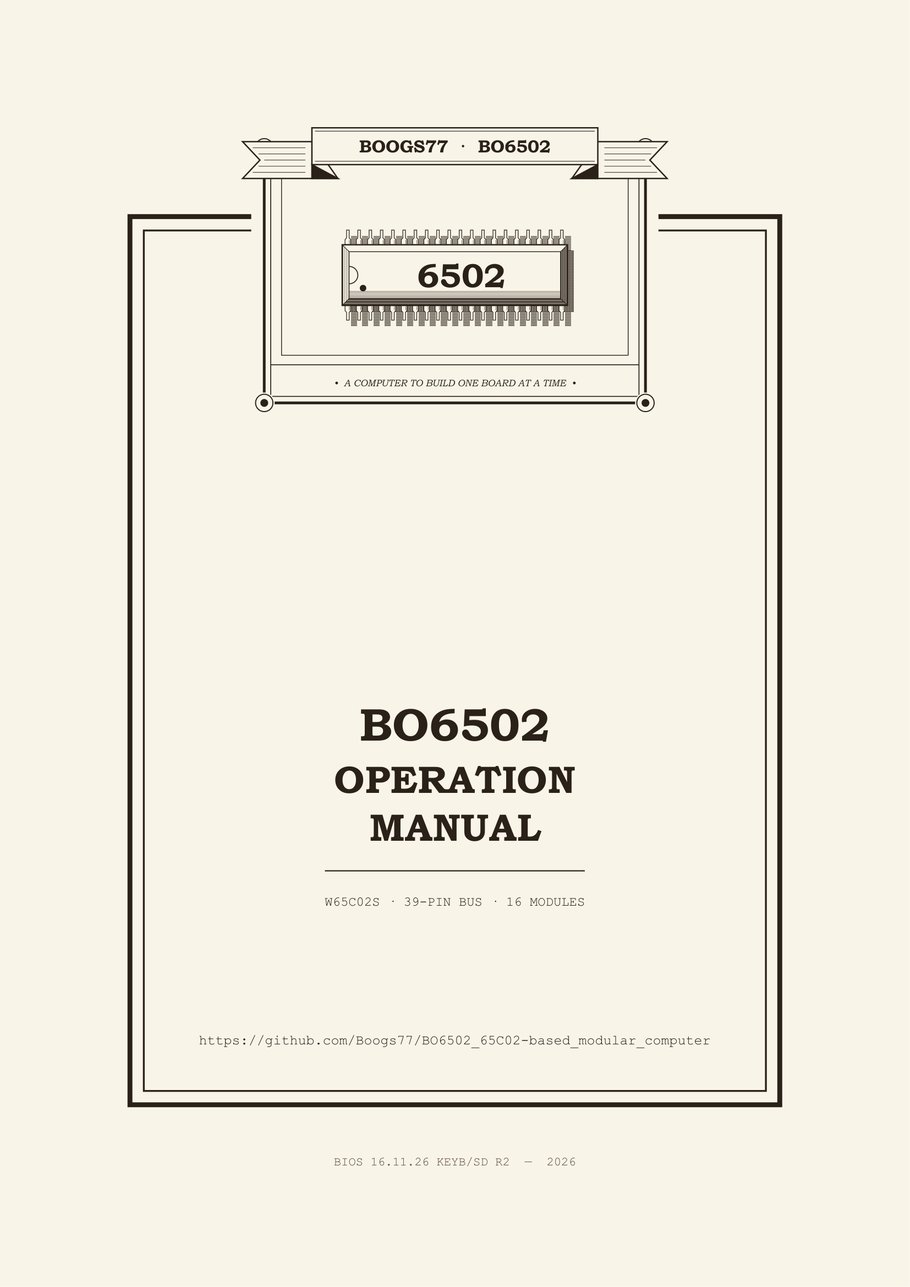
The BO6502 Operation Manual belongs to the same series and has the same look. It describes the modular computer board by board: the 39-pin bus, memory and device maps, every module with its jumpers, the schematics and bills of materials of all the boards, every chip register (TMS9918A, ACIA, VIAs, AY-3-8910, T6963C and HD44780 LCDs), the BIOS, WozMon and Microsoft BASIC, and what of the miniVIC software runs on it.

Cover of the BO6502 Operation Manual

Music and SD card

miniVIC Music holds songs for the two AY-3-8910 chips, as programs for the SD card. BO6502 SD Builder is a set of Python tools that pack the games, applications and songs into the RAW SD card image the BIOS menu reads. The emulator's default SD is built with it.

Try it in the browser

The BO6502 · miniVIC Emulator runs the real BIOS ROM in the browser, so you can play the games and use the applications without the hardware.

  • Choose BO6502 (boards in a rack) or miniVIC
  • Accurate TMS9918A and two AY-3-8910 chips in stereo
  • On-screen keyboard and joysticks; gamepads work too
  • Emulated SD card with all the games and applications
  • Debugger with CPU, memory, VDP, VIA and AY registers
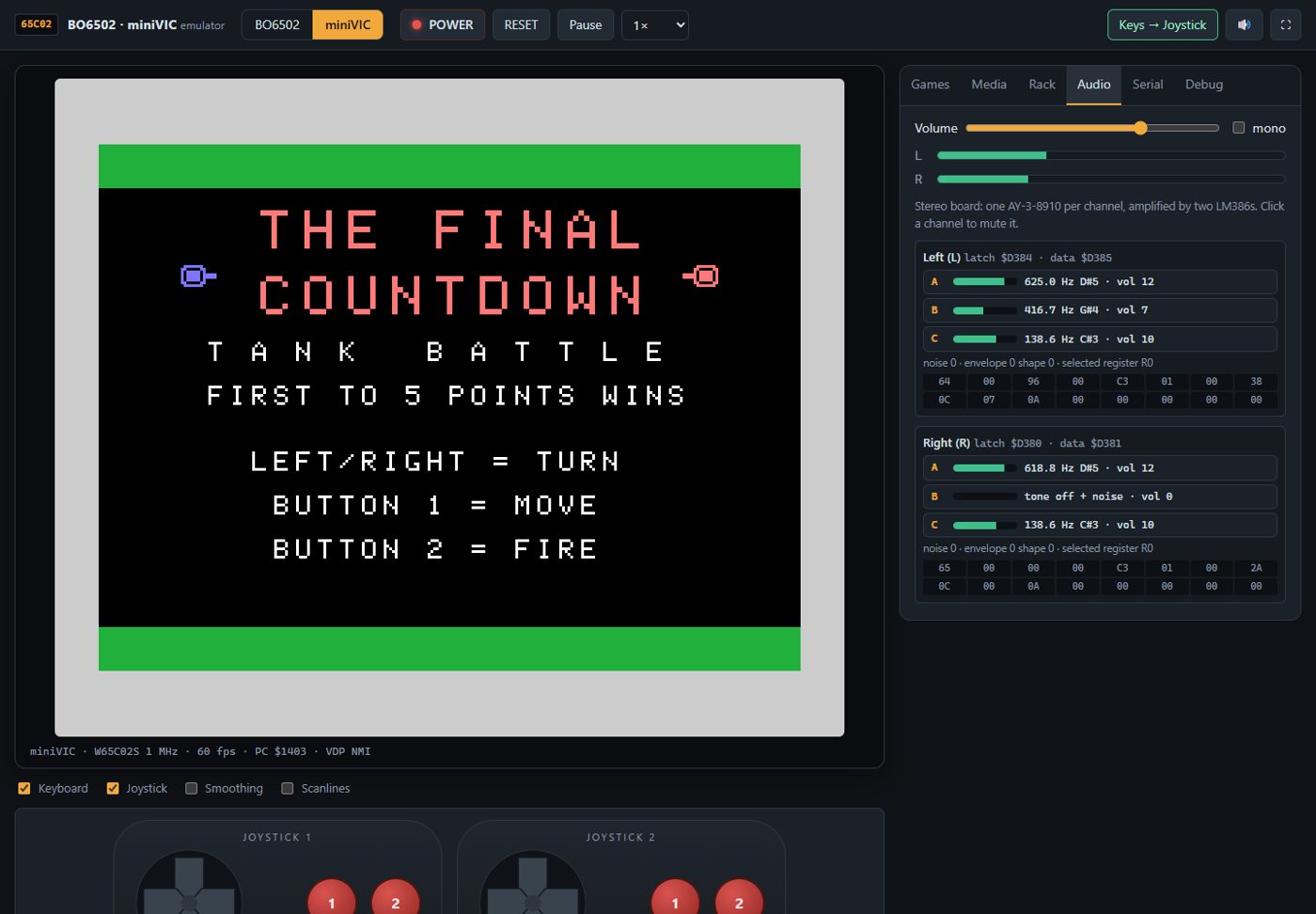
The emulator running Tank vs Tank, with the audio panel showing both AY chips

Videos

The introductory video of the whole system: five minutes, with subtitles, in Italian and English.

Italiano

Watch on YouTube →

English

Watch on YouTube →

Lab and test benches

Smaller projects used to test a chip on its own before designing its board, or to connect the computers to the outside world.

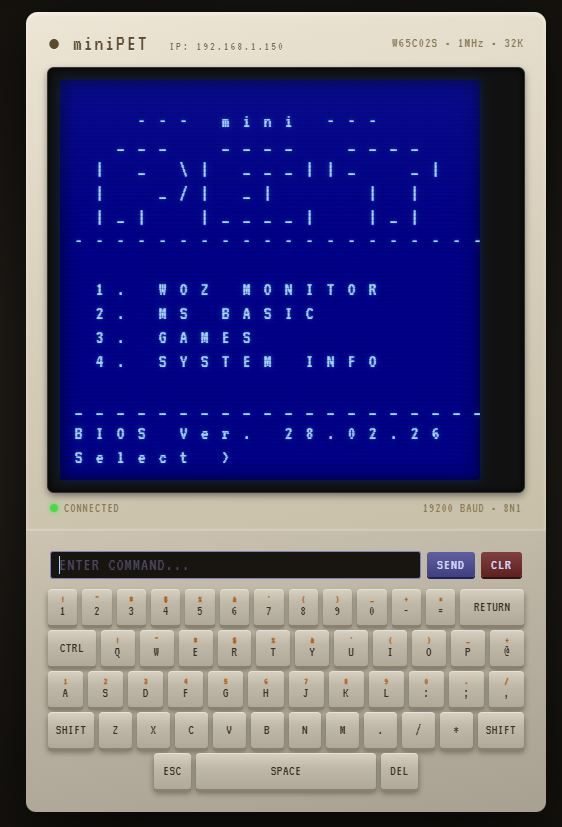
Browser page of the WebServerESP-6205 with a PET-style screen and keyboard

WebServerESP-6205

An ESP32 bridge from the BO6502 serial port to Wi-Fi. It serves a PET-style terminal that works in any browser.

Repository →
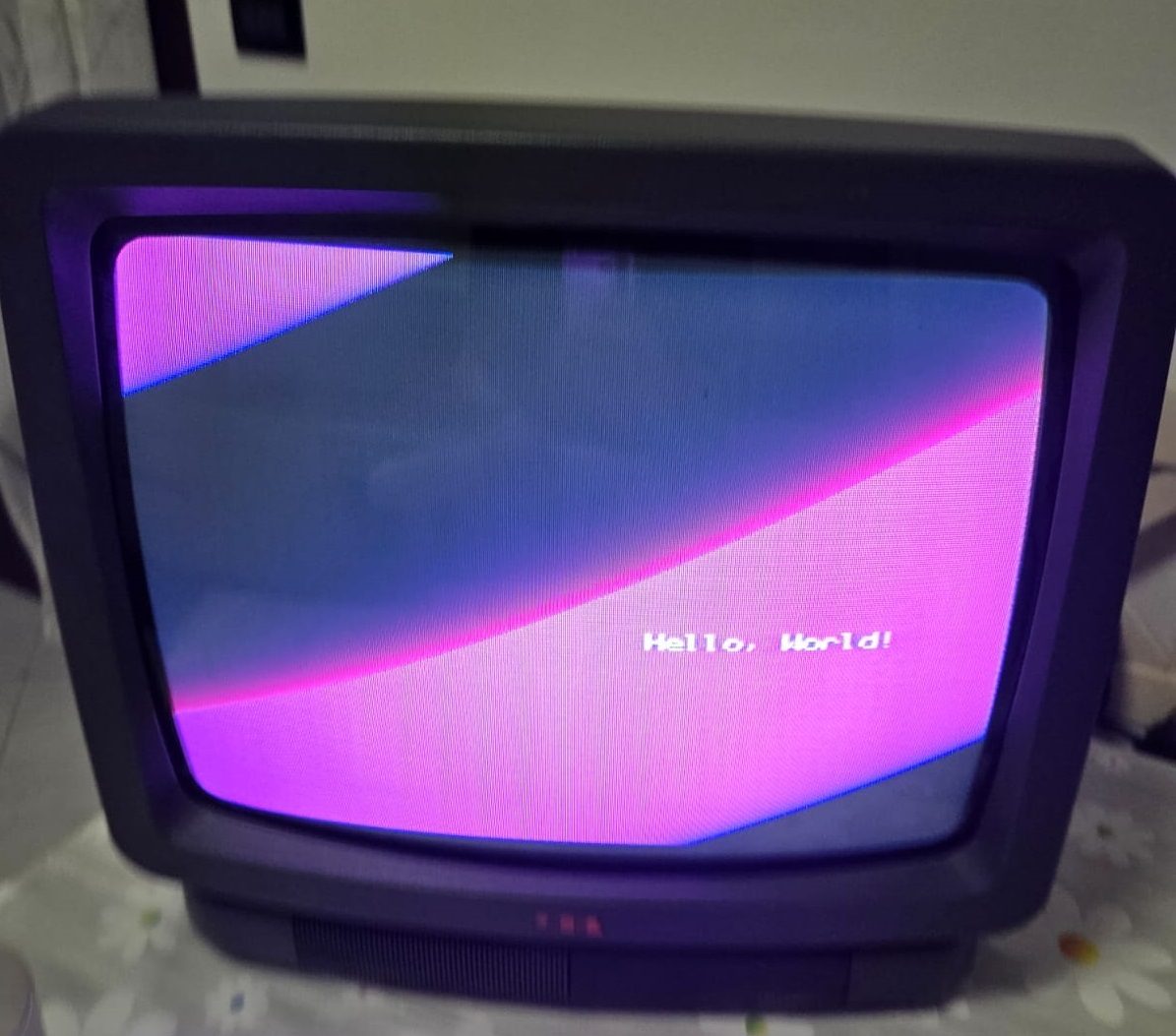
TMS9918A test showing text on a monitor

VDU Arduino test

A TMS9918A driven by an Arduino, the first step towards the VDU board.

Repository →

Timeline

How the project grew, from the first published boards to the miniVIC.

  1. BO6502 published

    The modular computer: CPU, RAM, ROM, backplate and the first I/O boards.

  2. TMS9918A on the bench

    Video tests with an Arduino, then the VDU board.

  3. Big LCD

    RA6963 display tests, then the Big LCD board.

  4. miniPET

    The first complete machine, with its 3D-printed case.

  5. Wi-Fi terminal

    WebServerESP-6205 connects the serial port to the browser.

  6. SD programs menu

    The miniVIC BIOS loads programs from the SD card, with a menu that spans several pages.

  7. Emulator and games

    The browser emulator and the miniVIC game collection go online.

  8. BIOS KEYB/SD and applications

    Extended keyboard, SD write on all cards, and eight office applications.

  9. miniVIC hardware

    Schematic, PCB and memory map published, with BIOS 03.11.26 KEYB/SD.

  10. Operation manual

    The miniVIC manual in English and Italian, with BIOS 16.11.26 KEYB/SD R2; the SD card builder goes public.

  11. BO6502 manual

    The operation manual of the modular computer, board by board, in English and Italian.